
ReGeneration
Thriving coastlines. Resilient communities.
The Indian Ocean: Past and present
For centuries, the Indian Ocean has connected the people who live along its shores. Its monsoon winds carried traders, ideas and cultures between East Africa, Arabia and South Asia, and coastal communities learned to live by the rhythm of its tides and seasons.
Today, more than two billion people live in the countries around its coastline and many depend on the ocean and its coasts for food, income and a way of life.
That way of life is under threat. The Indian Ocean is warming faster than most of the world’s oceans. Rains are harder to predict. Cyclones, floods and droughts are becoming more frequent and more severe. Mangrove forests – the coast’s natural defences – are being rapidly lost, fish stocks are declining and clean water is increasingly scarce.
When nature suffers, so do the people who depend on it. And when people have few ways to earn a living, the pressure on nature grows.
Adaptation and resilience have never been more urgent.
What is ReGeneration?
ReGeneration is a 10-year initiative (2026-2036) led by the Aga Khan Foundation that supports coastal communities and the natural environments they depend on to recover and thrive together.
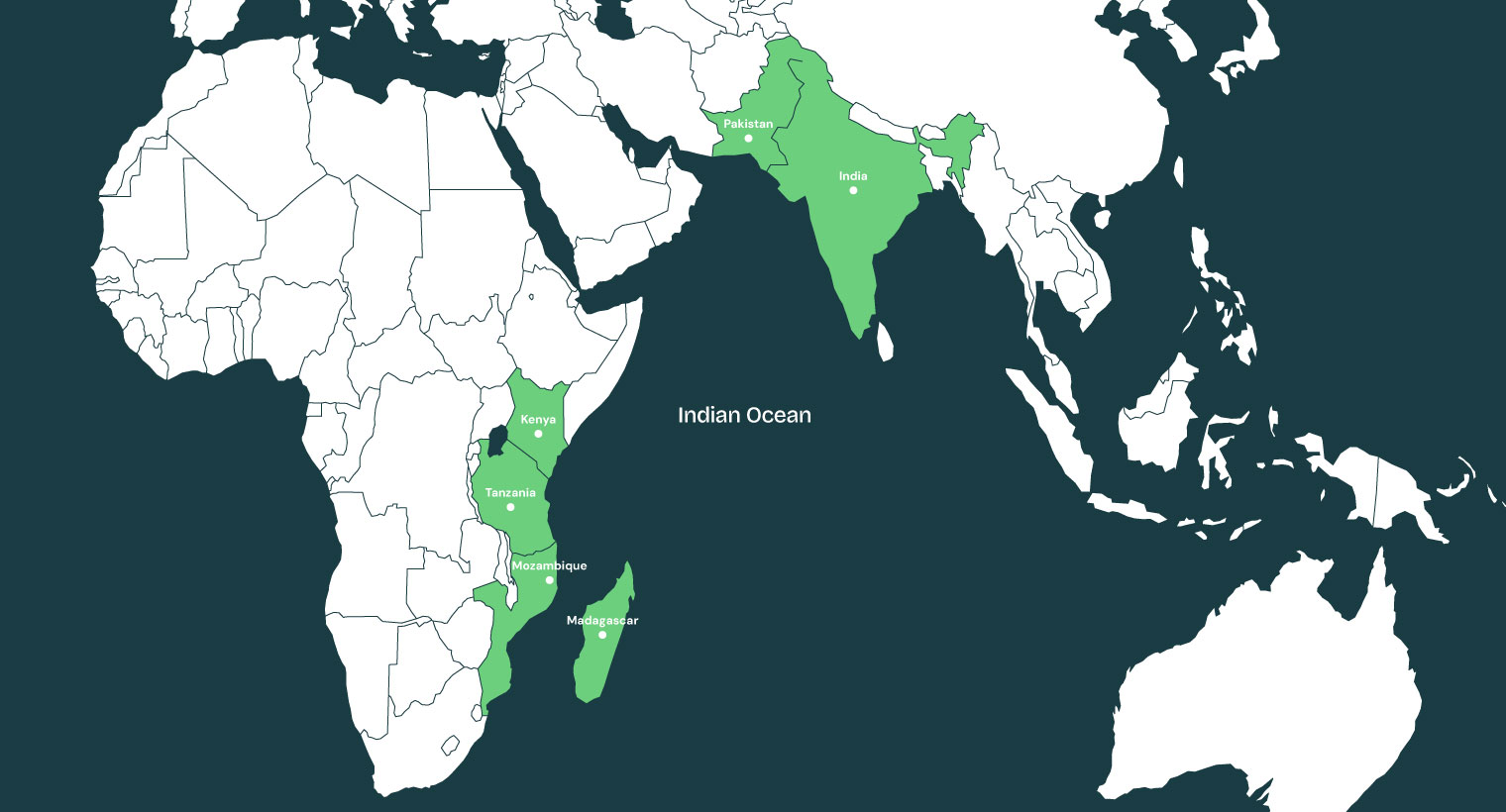
Working in coastal regions of Kenya, Tanzania, Mozambique, Madagascar, India and Pakistan, ReGeneration aims to protect and restore 150,000 hectares of coastal habitat, strengthen sustainable livelihoods and expand access to clean water and energy impacting millions of lives. To scale these locally led solutions, AKF will mobilise $500 million in co-investment.
It is built on a simple idea: along the coast, people and nature rise or fall together. Healthy mangroves protect shorelines from storms, shelter young fish and store large amounts of carbon. Yet where families have few other ways to earn a living or cook their food, these forests are often cut down for timber and charcoal.
ReGeneration helps communities meet those needs in other ways – through clean energy and new sources of income. It also shows that a mangrove forest can be worth more standing than felled, supporting alternative livelihoods such as beekeeping, crab farming and eco-tourism. Healthy mangroves sustain thriving communities, and thriving communities protect healthy mangroves.
The initiative is driven by a network of climate champions – community members, many of them women and young people – who are trained to lead restoration, share new practices and support their neighbours to adapt.
Working with communities, governments, researchers and development agencies, they build on the progress and learning of those who have lived on these shores for generations – and on decades of AKF’s own work alongside them.
ReGeneration is a 10-year, $500m initiative that supports Indian Ocean coastal communities and the environments they depend on to thrive together.
How ReGeneration works
ReGeneration brings together seven areas of work, tailored to the needs of coastal communities.
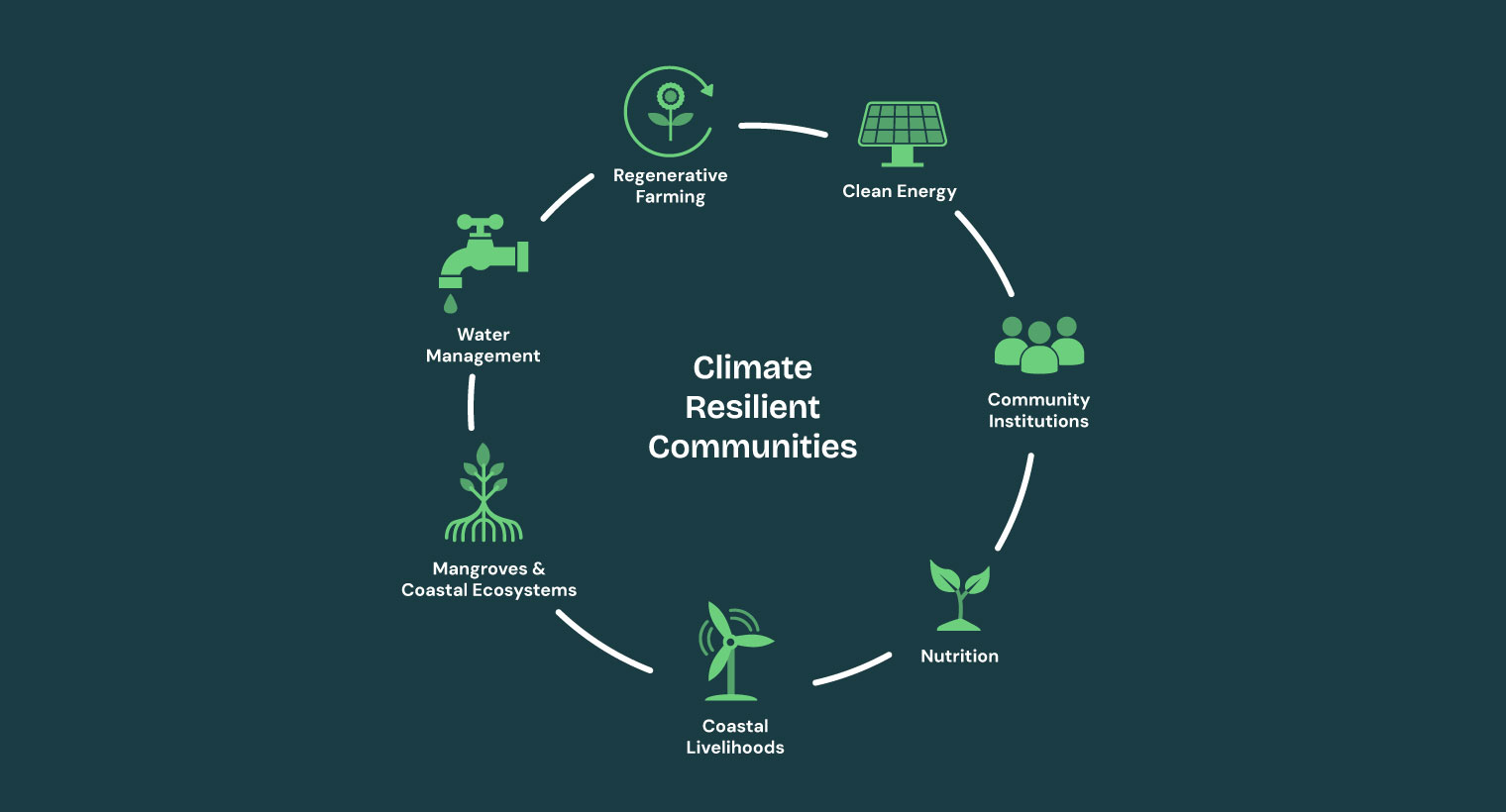
ReGeneration aims to protect and restore 150,000 hectares of coastal habitat, strengthen sustainable livelihoods and expand access to clean water and energy impacting millions of lives.
Where ReGeneration operates
From East Africa to South Asia, ReGeneration works in six countries that are home to globally important mangrove forests and to communities highly exposed to climate change. Its work reaches up to around 100 kilometres inland, to farming communities whose land, water and livelihoods are linked to the coast.
Sites were chosen based on the health of local mangroves, the needs and priorities of communities and where AKF has long-standing relationships with communities and governments.

Coastal communities in Mozambique play a critical role in planting and protecting mangroves.
Photo: Safira Chirindza

Ecotourism – including boat rides out into the mangroves – is one of the key livelihood components of ReGeneration.
Photo: Christopher Wilton-Steer

Khadija, a mangrove conservationist in Kwale, Kenya, prepares a mangrove seedling for planting – helping to restore the local area’s declining mangrove forests.
Photo: Kerensa Keevill

A local fisherman is rowing his ‘pirogue’ (dug out canoe) in the early morning, passing by mangroves in Maintirano, western Madagascar.
Photo: Grégoire Imberty

Women from Msangamkuu village, Tanzania, gather seaweed from the shore to add to their handmade soap. The seaweed is propagated by attaching small pieces of seaweed to a length of nylon rope and leaving the rope in the sea for the seaweed to grow larger.
Photo: Rich Townsend

Bhikhubhai Sindhav, a farmer, practices regenerative farming in Gujarat, India. Here he is spraying his crops with a bio-pesticide he has made using animal waste and plants that grow around his farm.
Photo: Christopher Wilton-Steer

Boats rest by the shore in Pemba, Mozambique.
Photo: Rich Townsend

Mangroves from above, Mombasa, Kenya.
Photo: Humberto Caldas

An integrated crab and fish pond in Sindh, Pakistan, supporting sustainable coastal livelihoods for local communities.
Photo: Zulfiqar Khan

To reduce deforestation and respiratory issues caused by smoke inhalation, AKF trains young people how to construct upgraded cookstoves for local communities in Gazi Bay, Kenya.
Photo: Christopher Wilton-Steer

Laxmiben, a member of a mangrove conservation group from Gandhavi Village in Gujarat, India. Laxmiben and her group are working to restore degraded mangroves along the coast.
Photo: Christopher Wilton-Steer

Dhows – traditional sailing boats and iconic symbols of the Indian Ocean – at sunset in Stone Town, Zanzibar.
Photo: Christopher Wilton-Steer
/12
Built on generations of knowledge
Coastal communities have cared for their mangroves and coasts for generations, drawing on knowledge passed down over centuries. ReGeneration builds on that knowledge and combines it with the latest science, so that solutions are shaped by – and belong to – the people who use them.
AKF and the wider Aga Khan Development Network (AKDN) have also worked in these regions for decades, investing in education, health, culture and economic development. The trusted partnerships built with communities, governments and institutions over that time are at the heart of ReGeneration.
Through AKDN – spanning universities, hospitals, businesses and cultural programmes – ReGeneration draws on a unique breadth of expertise and global partnerships.
“We have a shared responsibility to care for our oceans, which cover three quarters of the Earth’s surface. As part of the fight against climate change, our institutions are helping to ensure the protection of these precious natural resources.”
His Highness the Aga Khan
ReGeneration in action
Read and watch stories about our work so far across the Indian Ocean:
- Thriving Coastlines, Resilient Communities (Film)
- The Indian Ocean: How can coastal communities adapt to a rapidly changing environment?
- Madagascar’s Barren Isles: Responding to the climate crisis in one of the most remote places on Earth
- “The mangrove forest belongs to the community”: Working with nature to protect livelihoods and boost climate resilience
- Farming for the future: Josefina’s story
- BBC StoryWorks produces new film for AKF, exploring women-led mangrove restoration in Mozambique (watch below)
Partners
The following list of partners represents a selection supporting ReGeneration and is not exhaustive.












Join the movement
If you are a technical, funding, research or community partner and are interested in supporting ReGeneration, we want to hear from you.
Email us at: akf@akdn.org

Support our work Your donations are helping us build a future where we all thrive together.